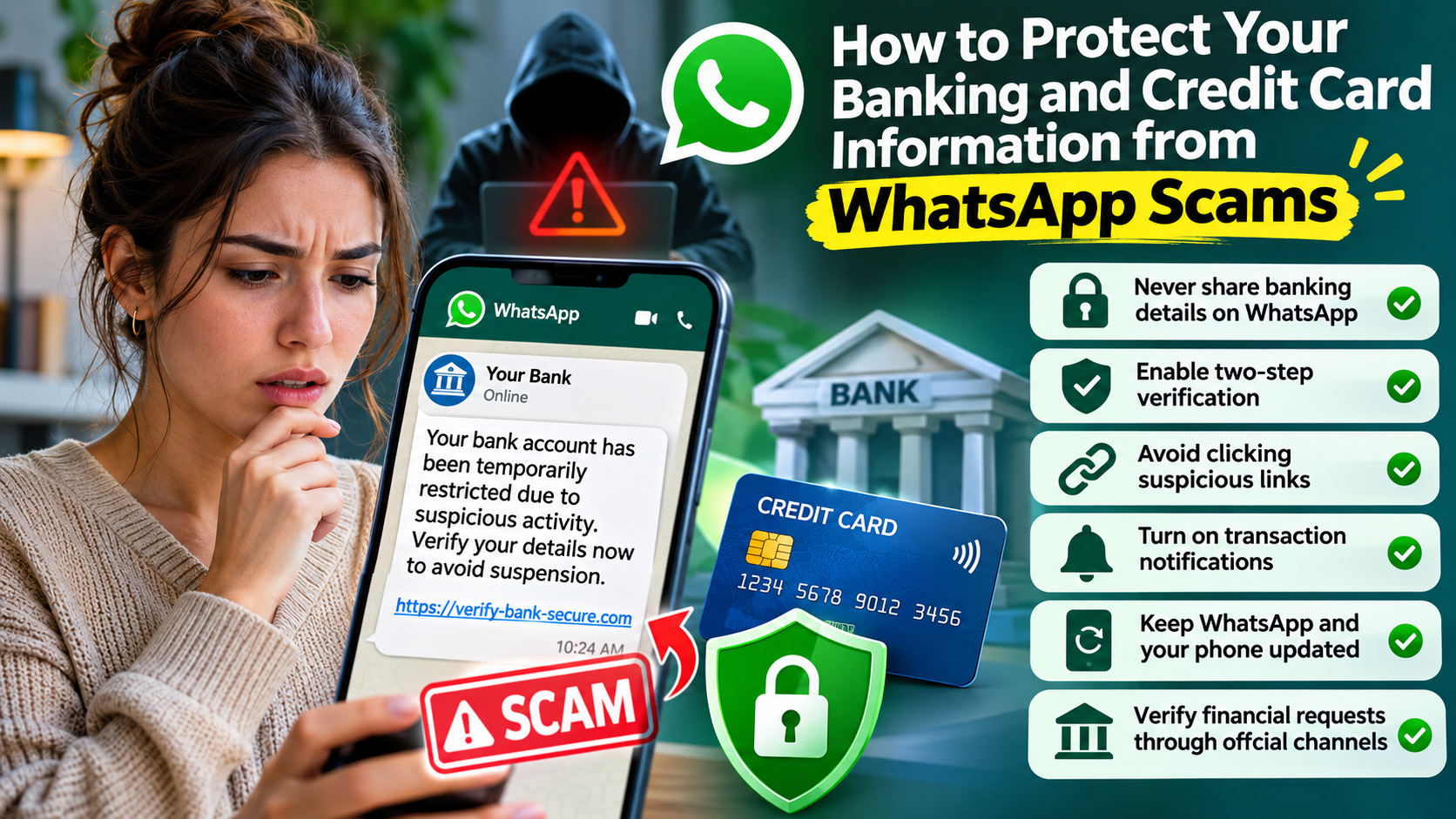
How to Protect Your Banking and Credit Card Information from WhatsApp Scams
WhatsApp has become part of everyday communication. People use it to talk with family, communicate with businesses, share documents, and receive important updates. Unfortunately, scammers have also discovered ways to use the messaging platform to steal money and sensitive financial information.
Imagine receiving a WhatsApp message that appears to come from your bank. It claims someone has attempted to make an unauthorized purchase using your credit card. The message includes a link and warns that your account will be suspended unless you verify your identity immediately.
You might feel worried and click the link without thinking. But instead of protecting your account, you could be handing your banking information directly to a criminal.
These scams can happen to almost anyone, including people who regularly use online banking and understand basic internet security.
The good news is that protecting yourself doesn't require advanced technical knowledge. Learning how WhatsApp financial scams work, recognizing suspicious messages, and following a few simple security habits can significantly reduce your risk.
This guide explains how to protect your bank accounts, credit cards, and personal information from WhatsApp scams.
Why WhatsApp Scams Are a Growing Financial Security Concern
WhatsApp allows people to communicate quickly across different countries. Its convenience makes it useful for legitimate conversations, but it also gives scammers opportunities to contact potential victims.
Criminals often pretend to represent trusted organizations, including banks, credit card companies, online stores, and financial service providers.
They may use professional-looking profile pictures, recognizable company logos, or carefully written messages to make their accounts appear legitimate.
Some scammers even obtain personal details from publicly available information or previous data breaches. This can make their messages sound surprisingly convincing.
The biggest danger is not necessarily a technical weakness in WhatsApp itself. Many attacks rely on social engineering, which means manipulating people into sharing information or taking actions they normally would avoid.
Even though personal WhatsApp conversations use end-to-end encryption, encryption cannot stop someone from voluntarily sending sensitive information to a scammer.
Understanding this difference is an important part of protecting your finances.
Common WhatsApp Scams That Target Banking Information
1. Fake Bank Security Alerts
One common technique involves sending messages that appear to come from a bank's fraud prevention department.
A scammer might write:
"Your bank account has been temporarily restricted due to suspicious activity. Verify your information immediately to prevent permanent suspension."
The message usually includes a link to a fraudulent website designed to resemble the bank's official login page.
If you enter your username, password, or credit card details, the information may go directly to the scammer.
How to stay safe: Never access your bank account through an unexpected WhatsApp link. Instead, open your banking application or visit the bank's official website independently.
2. Fake Credit Card Verification Requests
Another common scam involves requests to confirm credit card information.
Someone may claim your credit card has been blocked, an online transaction has failed, or your card needs an urgent security update.
They might ask for your:
Credit card number
Card expiration date
Card Verification Value (CVV)
Online banking password
One-time verification code
Providing these details could allow criminals to attempt unauthorized purchases or access your financial accounts.
A legitimate bank will not need you to send your password, PIN, or one-time security code through WhatsApp to resolve a problem.
3. Fake Customer Support Representatives
Scammers sometimes impersonate customer service employees from banks, payment applications, or popular online businesses.
They may offer assistance with a refund, declined payment, or account verification issue.
Once they gain your trust, they might request sensitive information or ask you to install an application that allows remote access to your phone.
This is particularly dangerous because remote access software or screen sharing can expose private banking activity.
Never give an unknown person control of your phone, even if they claim to be helping you solve a financial problem.
4. Investment and Easy-Money Scams
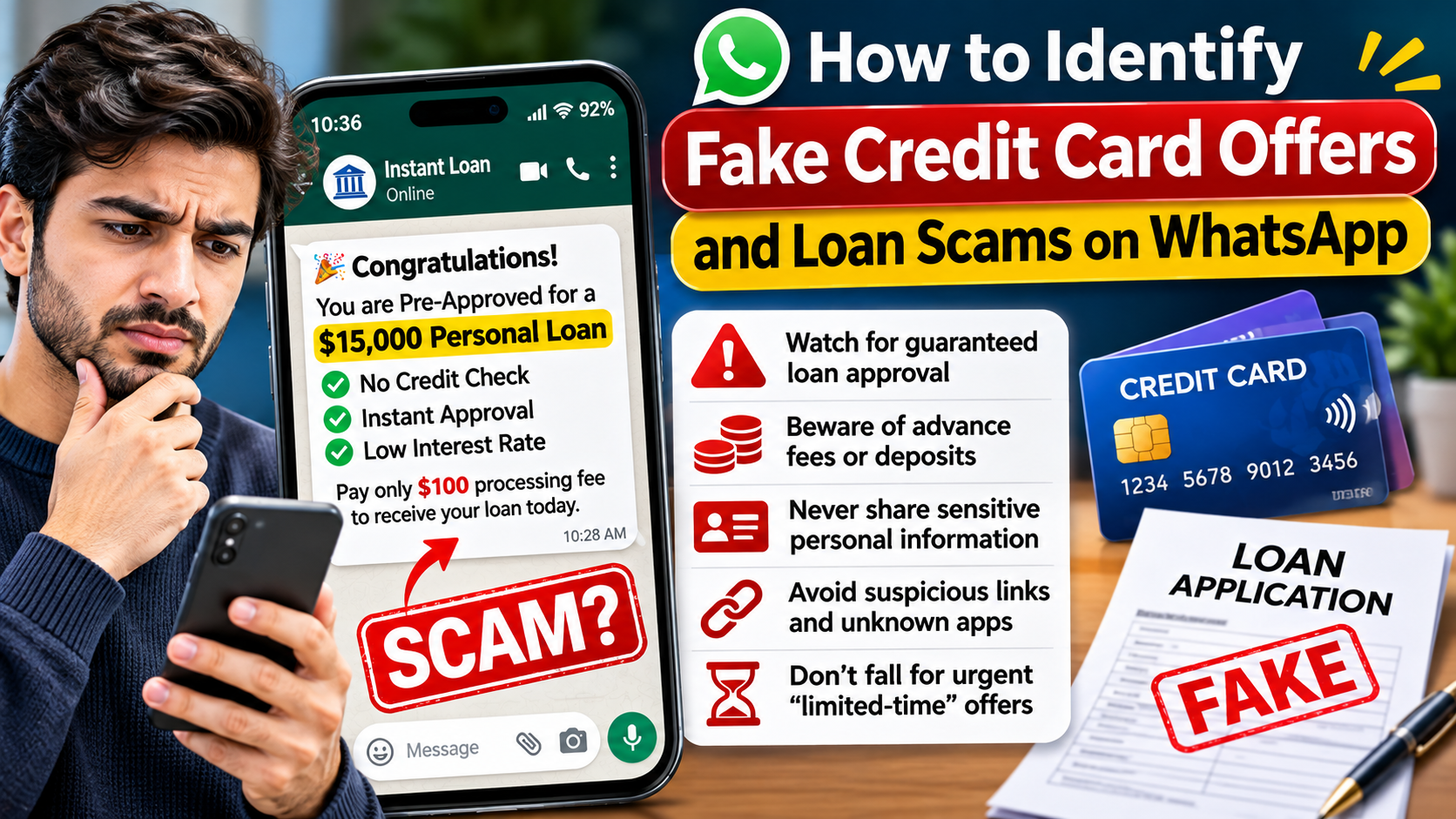
WhatsApp investment scams frequently begin with attractive financial promises.
A stranger might invite you into an investment group that claims to offer guaranteed profits from cryptocurrency, stocks, or automated trading.
The group may include fake testimonials and screenshots showing impressive earnings.
Initially, scammers might encourage a small deposit. Later, they may demand larger payments or additional fees before allowing withdrawals.
Remember that legitimate investments involve risk. Anyone guaranteeing unusually high returns without risk deserves serious skepticism.
Warning Signs of a WhatsApp Banking Scam
Not every suspicious message is immediately obvious. Some scams are professionally written and appear believable.
However, several warning signs should make you cautious.
Urgent threats: Messages claiming your bank account will be frozen within minutes are often designed to create panic.
Requests for confidential information: Never share banking passwords, card security codes, or verification codes in a chat.
Unexpected links: Fraudulent links may imitate genuine banking websites while using slightly different domain names.
Unusual payment requests: Be suspicious if someone demands payment through gift cards, cryptocurrency, or a personal bank account.
Pressure to keep conversations secret: Scammers may discourage you from contacting your bank or discussing the situation with family.
Grammar mistakes can also be warning signs, but well-written messages can still be fraudulent.
The safest approach is to verify unexpected financial requests independently.
7 Practical Ways to Protect Your Banking and Credit Card Information
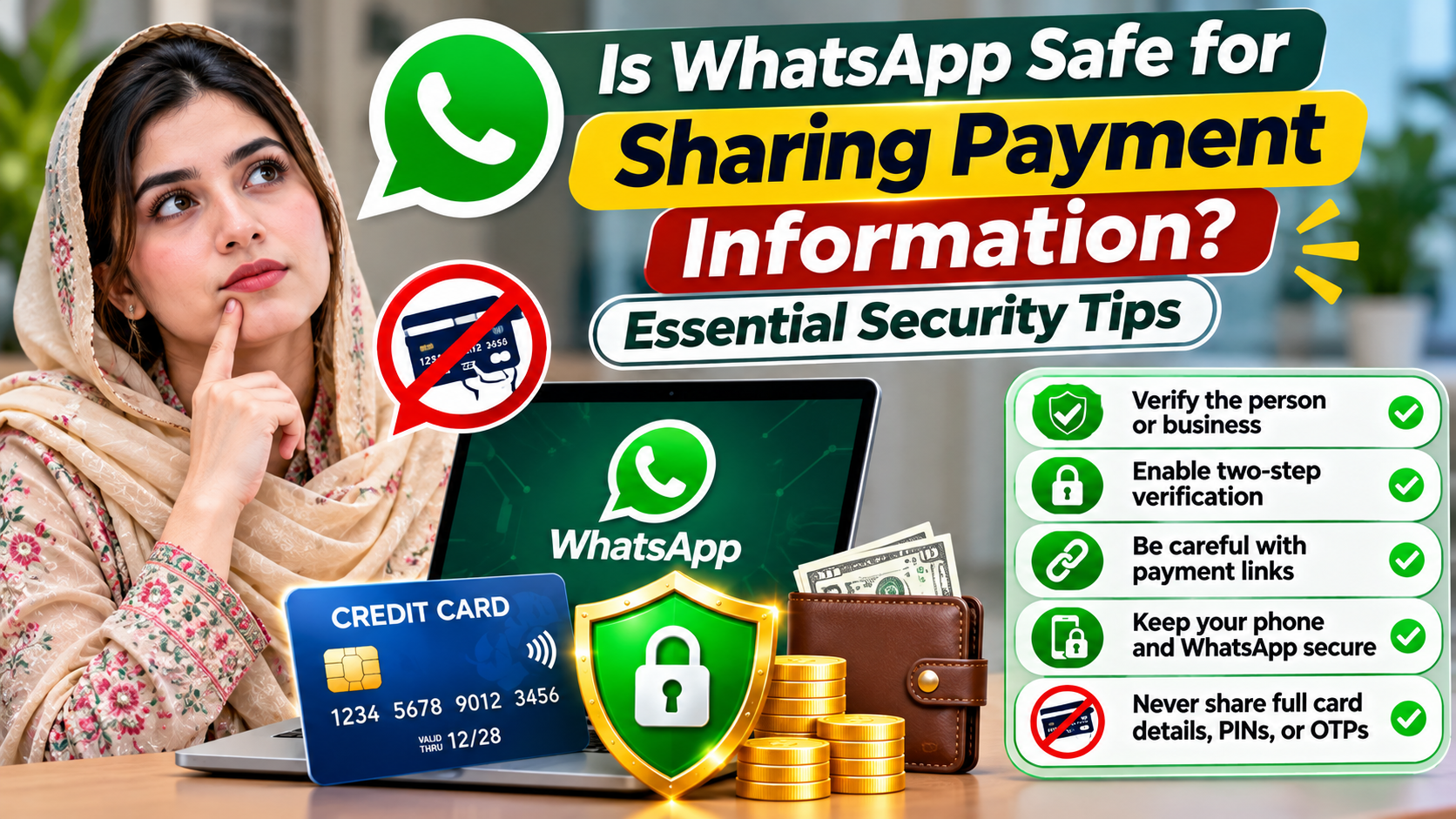
1. Never Share Sensitive Banking Details on WhatsApp
Your bank account credentials and payment card information should remain private.
Avoid sending photographs of your credit card, bank statements containing confidential information, or screenshots showing account numbers.
Even when communicating with someone you know, consider whether sharing financial information is necessary.
A trusted contact's WhatsApp account could be compromised without your knowledge.
For account-related requests, use your bank's secure application or another officially approved communication channel.
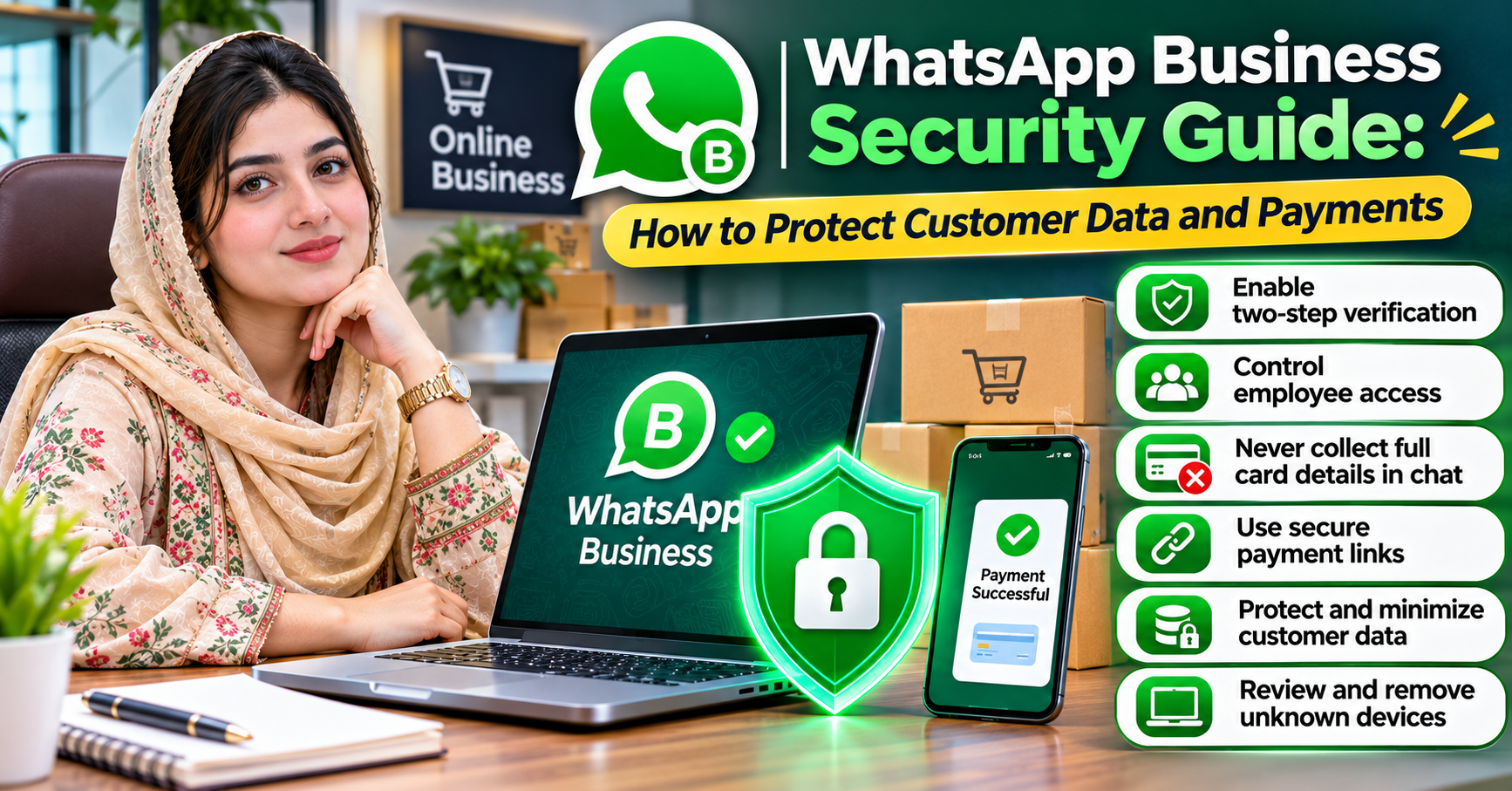
2. Enable Two-Step Verification on WhatsApp
Two-step verification adds protection against someone attempting to take over your WhatsApp account.
To find the feature:
Open WhatsApp.
Go to Settings.
Select Account.
Open Two-step verification.
Follow the instructions to enable the available security options.
Depending on your WhatsApp version, you may be able to configure a stronger password and additional recovery options.
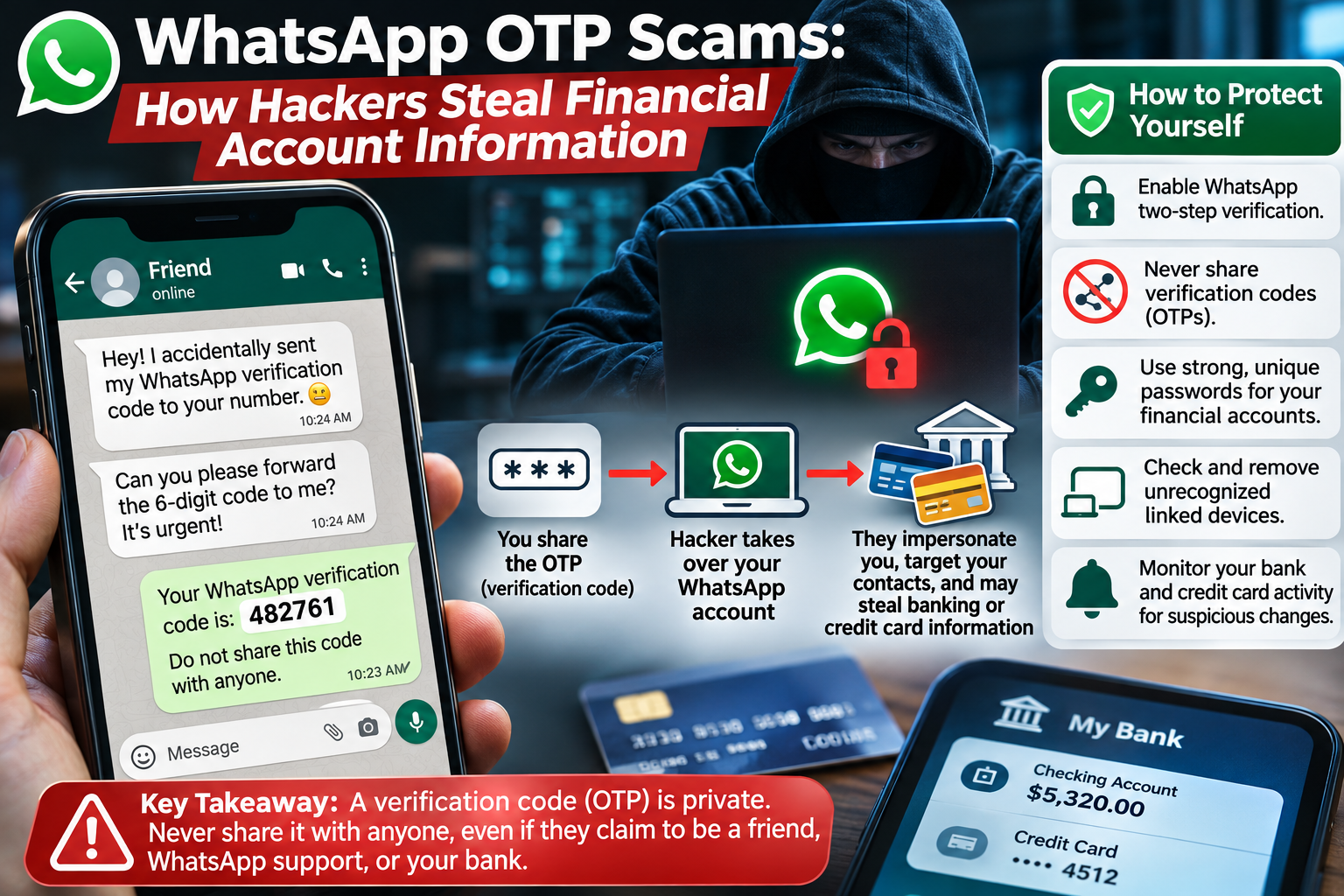
Never share your WhatsApp registration or security codes with another person.
Also review your linked devices periodically and remove any sessions you do not recognize.
3. Use Strong Passwords for Financial Accounts
Your online banking password should be difficult to guess and different from passwords used for social media or messaging applications.
Avoid using birthdays, simple number sequences, or personal information that others could discover.
Consider using a reputable password manager to create and store long, unique passwords.
Enable multifactor authentication on banking accounts whenever your financial institution supports it.
These protections can make unauthorized access significantly harder, even if one password is exposed.
4. Avoid Clicking Suspicious Banking Links
One careless click can lead to a convincing fake banking website.
Before opening a link, ask yourself whether you were expecting the message and whether the sender has a legitimate reason to contact you.
A website displaying a padlock or using HTTPS is not automatically trustworthy. Scammers can create encrypted websites too.
For financial matters, open the official banking app directly instead of following links from WhatsApp conversations.
5. Turn On Banking Transaction Notifications
Many U.S. banks and credit card issuers offer transaction alerts through their mobile applications, email, or text messages.
These notifications can help you identify unusual activity quickly.
Consider enabling alerts for purchases, withdrawals, online transactions, and account changes.
You should also review your statements regularly because not every suspicious transaction will necessarily trigger an alert.
If you discover an unfamiliar charge, contact your financial institution immediately.
6. Keep WhatsApp and Your Phone Updated
Software updates often include security improvements that help protect devices against known vulnerabilities.
Install WhatsApp updates through official application stores and keep your phone's operating system current.
Avoid downloading unofficial WhatsApp versions or unknown applications recommended by strangers.
You can also explore WhatsApp's privacy settings to limit unwanted calls, control who can add you to groups, and reduce unsolicited contact.
These features cannot eliminate scams, but they can reduce your exposure.
7. Verify Financial Requests Through Official Channels
Suppose someone contacts you on WhatsApp claiming to work for your bank.
Instead of continuing the conversation, contact the bank using the number printed on your payment card or listed in its official app.
Do not use a telephone number supplied in the suspicious message.
This simple verification habit can prevent many impersonation scams.
The same principle applies when a friend or relative unexpectedly requests money. Contact the person through a separate, trusted method before transferring funds.
What to Do If You Shared Banking Information with a WhatsApp Scammer
Discovering that you may have been scammed can be stressful. However, acting quickly may prevent additional losses.
Step 1: Contact your bank immediately.
Explain what happened and identify the information you shared. Ask whether your account should be temporarily restricted or your payment card replaced.
Step 2: Change compromised passwords.
Use your bank's official application or website to update affected passwords. Change passwords on other accounts if you reused the same credentials.
Step 3: Review recent transactions.
Examine your bank and credit card activity for unfamiliar charges, transfers, or account changes.
Step 4: Report unauthorized transactions.
Notify your financial institution as soon as possible. Federal consumer protections may apply, but your rights and potential liability depend on the type of transaction, how it occurred, and how quickly you report it.
Step 5: Report and block the WhatsApp account.
Use WhatsApp's reporting tools to flag suspicious activity and prevent further messages from the scammer.
Step 6: Consider identity theft protection measures.
If sensitive identity information was exposed, consider placing a fraud alert or security freeze on your credit reports with the major U.S. credit bureaus.
You can also report suspected fraud to the Federal Trade Commission.
Keep screenshots, transaction records, and communications related to the incident. They may help your bank investigate.
Can WhatsApp Scammers Steal Money Without Your Credit Card?
Yes, depending on what information or access they obtain.
A scammer does not always need your physical card to cause financial damage.
For example, stolen banking credentials combined with a verification code may allow someone to access an online account.
Criminals may also trick victims into authorizing transfers themselves. In other cases, compromised devices or exposed payment card details can lead to unauthorized transactions.
This is why protecting passwords, verification codes, and device access is just as important as protecting your physical credit and debit cards.
Are Credit Cards Safer Than Debit Cards Against Scams?
Credit cards generally offer strong consumer protections against unauthorized charges under U.S. federal law.
Debit cards also have important protections, but reporting deadlines and potential liability rules differ.
One practical difference is that debit card fraud can involve money leaving your checking account directly, potentially affecting funds needed for everyday expenses.
With credit card fraud, you generally dispute charges on a credit account rather than having those amounts immediately withdrawn from checking.
However, neither payment method guarantees reimbursement when someone is tricked into knowingly authorizing a payment.
Protecting your account information and reporting suspicious activity promptly remains essential regardless of which card you use.
How to Help Family Members Avoid WhatsApp Financial Scams
Financial security becomes stronger when everyone in a household understands common scam tactics.
Explain to family members that banks do not require customers to disclose confidential security codes through WhatsApp.
Encourage them to question unexpected requests for money, even when messages appear to come from familiar contacts.
Older adults, younger users, and people unfamiliar with digital banking may benefit from practical examples rather than complicated technical explanations.
A useful family rule is simple: Before sending money or sharing financial information, verify the request through another trusted channel.
Taking a few minutes to confirm a message can prevent a costly mistake.
Final Thoughts
WhatsApp is a convenient communication platform, but convenience should never come at the expense of financial security.
Scammers frequently rely on fear, urgency, false promises, and impersonation to convince people to reveal sensitive information.
The most effective defense is a combination of awareness and sensible security habits.
Protect your banking passwords, never share verification codes, avoid unexpected financial links, enable available account security features, and monitor your transactions regularly.
Most importantly, remember that a message appearing to come from a trusted organization is not proof that the sender is genuine.
Your financial information is valuable. Taking a moment to verify a suspicious request today could protect your savings and credit accounts tomorrow.