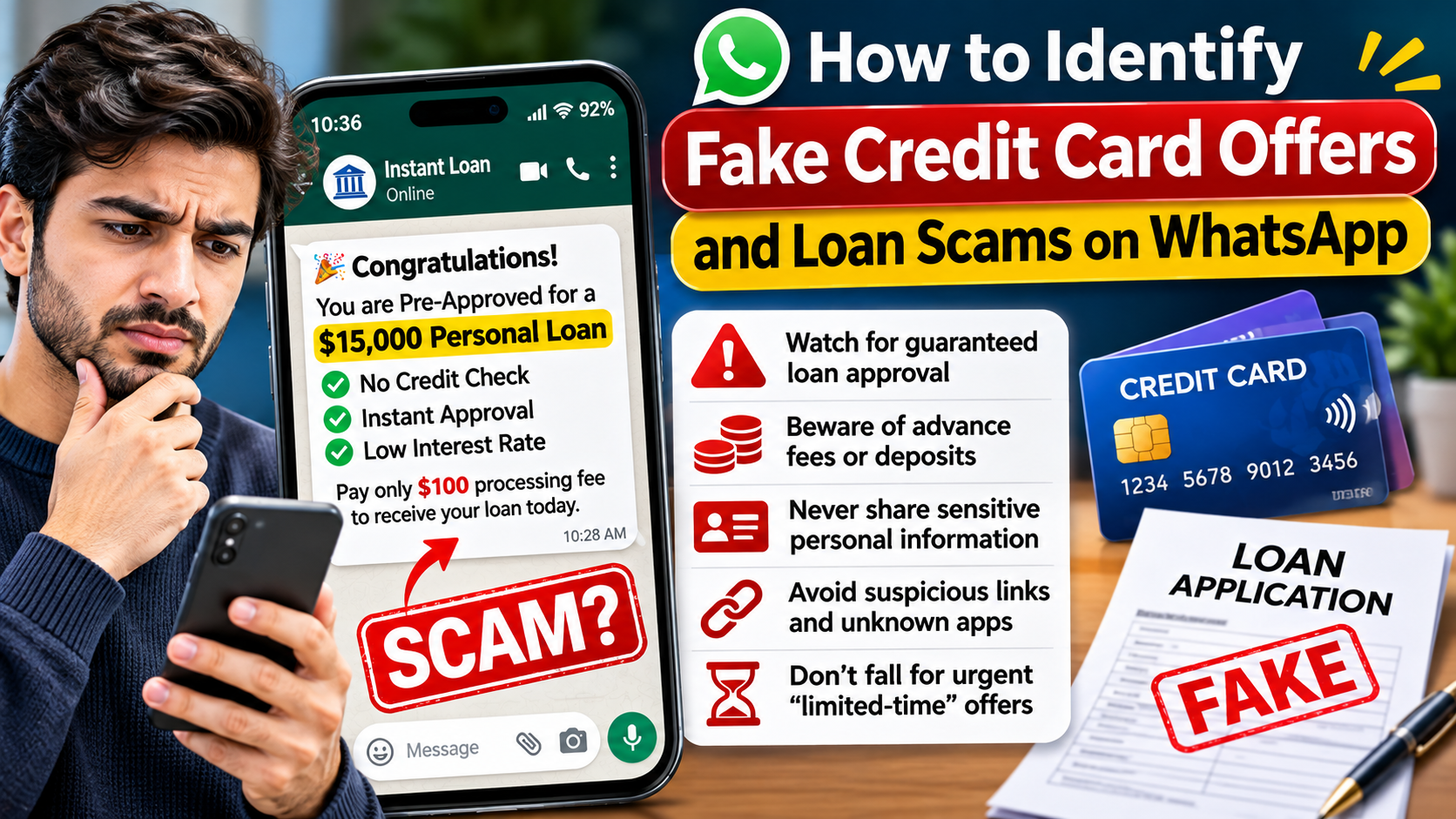
How to Identify Fake Credit Card Offers and Loan Scams on WhatsApp
WhatsApp has become an everyday communication tool for millions of people. From staying connected with family to receiving business updates, the platform makes communication fast and convenient. Unfortunately, scammers also use WhatsApp to reach people with fake credit card offers, personal loan approvals, and misleading financial promotions.
Imagine receiving a message saying you have been approved for a $20,000 personal loan with a low interest rate. The sender claims you only need to pay a small processing fee to receive the money. It sounds like an easy solution, especially if you are dealing with unexpected expenses.
But that message could be the beginning of a financial scam.
Fraudsters often impersonate banks, credit card companies, and lending institutions to steal money or sensitive personal information. Knowing how these scams work can help you recognize suspicious offers before they cause financial damage.
This guide explains the warning signs of fake credit card and loan offers on WhatsApp, how to verify financial promotions, and what to do if you have already interacted with a scammer.
Why Are Credit Card and Loan Scams Common on WhatsApp?
WhatsApp allows people to communicate directly without traditional advertising or business verification processes. Although the platform includes security and reporting features, scammers can still create accounts and contact unsuspecting users.
Fraudsters may use professional-looking profile pictures, financial institution logos, and convincing messages to appear legitimate.
Some attackers even impersonate customer service representatives from recognizable banks.
These scams often target individuals searching for personal loans, debt consolidation, credit cards, or financial assistance.
People facing urgent financial needs may be particularly vulnerable because a promise of fast approval can seem attractive.
Scammers understand this pressure and frequently use it to encourage rushed decisions.
1. Watch Out for Guaranteed Loan Approval
One of the biggest warning signs is a WhatsApp message promising guaranteed approval regardless of your financial situation.
A suspicious message might say:
"Congratulations! You qualify for a $15,000 loan with guaranteed approval. No credit history or income verification required."
Legitimate lenders generally evaluate relevant financial information before making a firm credit decision.
Depending on the loan, this may involve reviewing income, existing debts, credit history, and repayment ability.
Some legitimate lenders offer prequalification or products without traditional credit checks. However, these arrangements still involve eligibility requirements and should not be confused with unconditional approval.
Be especially cautious when an unknown sender promises substantial financing without requesting a legitimate application.
Remember: A prequalified or preapproved offer does not necessarily mean your final application will be approved.
2. Never Trust Requests for Advance Payments
A common WhatsApp loan scam involves requesting money before releasing an approved loan.
The scammer may claim you must pay an insurance deposit, activation charge, tax, or processing fee.
For example, someone might say:
"Your $10,000 loan is approved. Please send $150 to activate the transfer."
After receiving payment, the scammer may disappear or demand additional fees.
Legitimate lenders can charge certain disclosed application, origination, or other fees, depending on the product. However, a stranger demanding payment through a personal account or payment app to unlock a supposedly guaranteed loan is a serious warning sign.
Never send gift cards, cryptocurrency, or personal money transfers to someone who promises immediate loan approval in exchange.
3. Be Suspicious of Requests for Sensitive Financial Information
Fake credit card offers frequently attempt to collect information that criminals can use for fraud or identity theft.
A scammer may request:
Your Social Security number
Credit card numbers and expiration dates
Card security codes (CVV)
Online banking passwords
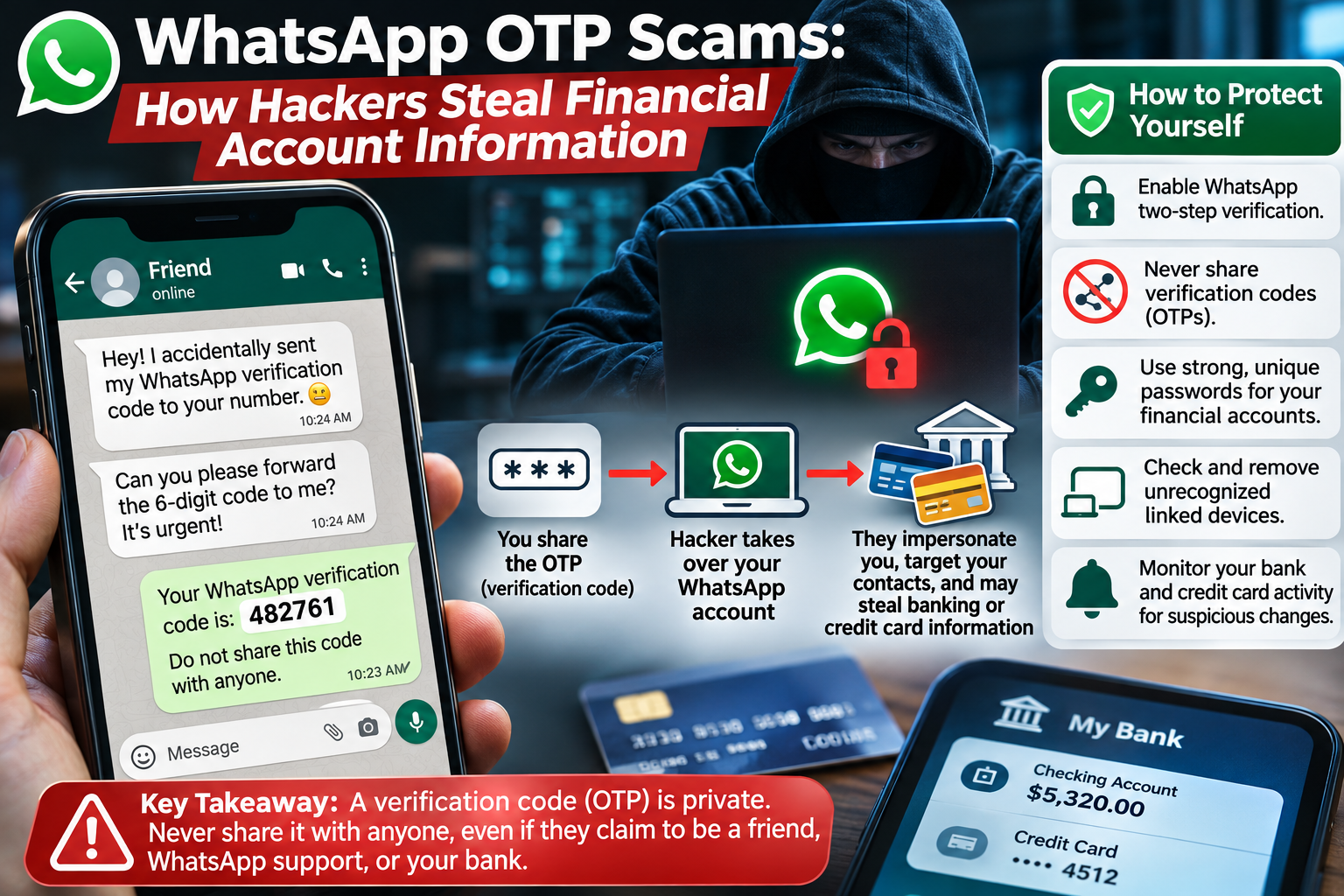
One-time verification codes
Bank account and routing numbers
Photographs of identification documents
Some of this information may be required during a legitimate financial application, but it should only be provided through a verified, secure process with a trusted institution.
Never send banking passwords, verification codes, or complete payment card details to an unknown person through WhatsApp.
If someone claims to represent your bank, contact the institution independently using its official website, mobile application, or the phone number printed on your card.
4. Examine Suspicious Links Carefully
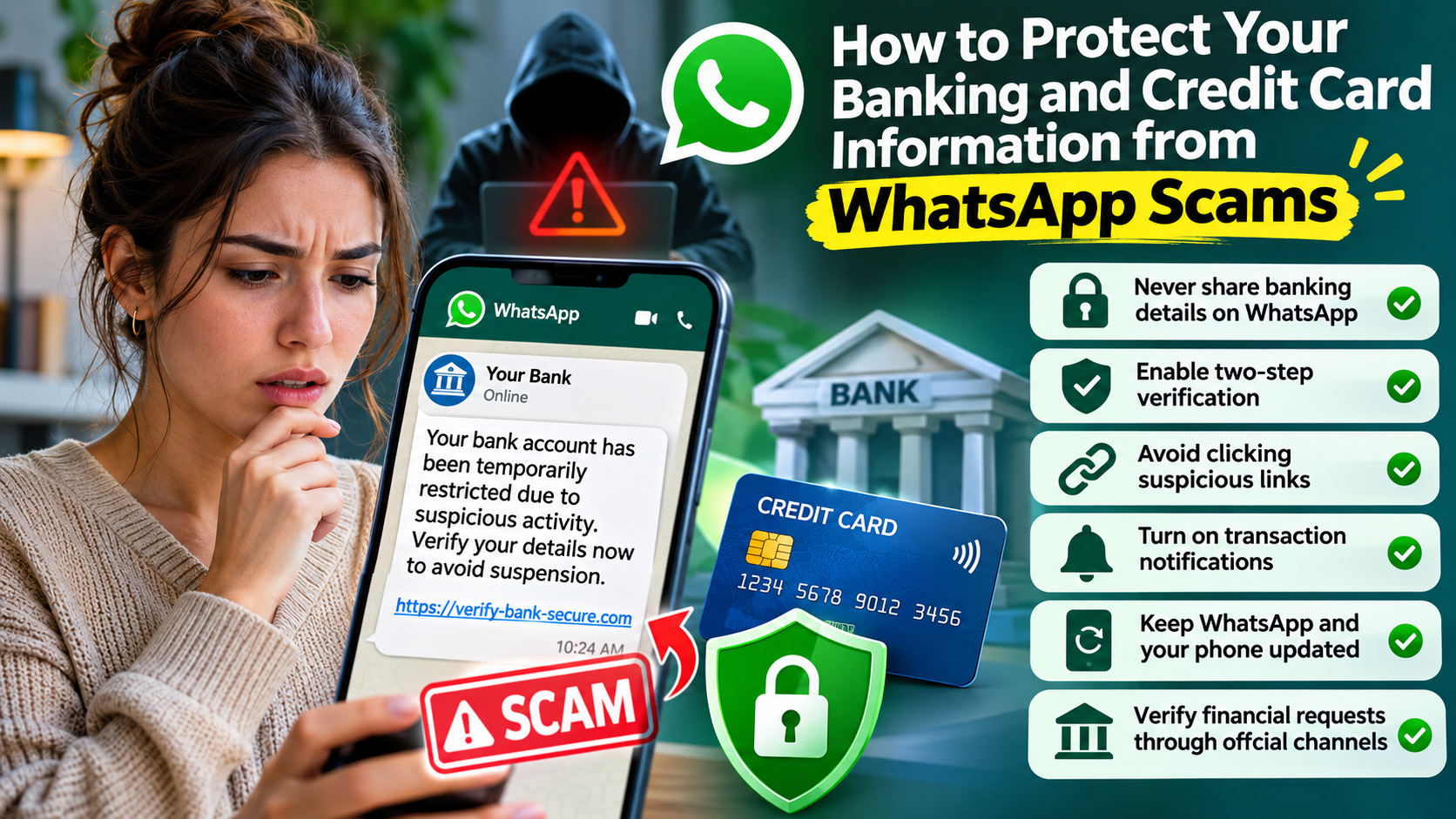
Many financial scams begin with a link that appears to direct users to a bank or lending website.
The page may display an official-looking logo, application form, and customer testimonials.
However, the website could be designed to capture personal details.
Scammers sometimes create addresses that closely resemble legitimate financial websites by changing letters, adding unusual words, or using misleading domain names.
A secure-looking padlock or HTTPS connection alone does not prove that a website is trustworthy.
Before entering financial details, open your browser separately and visit the bank's official website yourself.
Avoid downloading unexpected loan applications, document files, or verification tools sent by unknown WhatsApp contacts.
5. Recognize Fake Credit Card Approval Messages
Credit card scams may look different from traditional personal loan fraud.
Instead of offering cash, scammers promise premium credit cards with unusually attractive benefits.
Examples include:
Instant approval for a high-limit credit card
Guaranteed approval with poor credit
Zero interest forever
Large cash rewards without restrictions
Exclusive cards available only through WhatsApp
Immediate approval after paying a small registration fee
Real credit card offers have eligibility conditions and important disclosures.
These commonly include information about the annual percentage rate (APR), applicable fees, and the terms governing rewards.
If a person promises exceptional benefits but refuses to provide official documentation, treat the offer cautiously.
A genuine promotion should be independently verifiable through the card issuer.
6. Do Not Fall for Artificial Urgency
Scammers frequently create pressure by claiming that an offer expires within minutes.
Messages might say:
"Your loan approval expires in 15 minutes. Complete payment immediately."
Others may claim that a limited number of credit cards remain available.
The purpose is to discourage careful research.
Legitimate financial decisions should not depend on threats or unreasonable pressure from an unknown contact.
You should have adequate time to examine loan terms, compare interest rates, and verify the company.
If someone becomes aggressive when you ask reasonable questions, stop communicating.
Walking away from an uncertain offer is safer than making a rushed financial commitment.
7. Check the Sender's Identity
A WhatsApp profile picture featuring a familiar bank logo does not establish that the person works for that bank.
Fraudsters can copy photographs, company names, and promotional graphics.
Even an account that appears professional should not automatically be trusted.
Pay attention to unexpected messages from unfamiliar numbers, particularly when the sender claims to represent a major financial company.
Look for inconsistencies in the business name, website, phone number, and communication style.
Be careful when someone refuses to communicate through official customer service channels.
The safest approach is to contact the company using information found independently, rather than relying on contact details provided in the suspicious message.
8. Look for Missing Loan Terms and Hidden Charges
A legitimate loan offer should explain its financial obligations clearly.
Before agreeing to borrow money, review important details such as:
The loan amount
Annual percentage rate (APR)
Repayment period
Monthly payment amount
Origination and other applicable fees
Late-payment consequences
Total repayment cost
For example, a $10,000 loan with an attractive monthly payment might still be expensive if the repayment period is unusually long or substantial fees apply.
Scammers may avoid discussing these details because they have no genuine loan product.
Others use misleading numbers to make an offer look more affordable.
Never accept a loan based only on an advertised interest rate or a WhatsApp screenshot.
Request complete written disclosures from a verified lender and review them before proceeding.
Common Examples of WhatsApp Financial Scams
Understanding realistic scenarios can make suspicious messages easier to identify.
Fake Personal Loan Approval
A user receives a message claiming that a $25,000 loan has been approved despite never submitting an application.
The sender requests banking information and a small activation payment.
Warning sign: An unexpected approval combined with a demand for sensitive information or advance payment.
Fake Credit Card Upgrade
Someone impersonates a bank representative and claims the recipient qualifies for a higher credit limit.
To activate the upgrade, the person must provide a verification code sent to their phone.
Warning sign: The sender asks for a one-time security code that could allow unauthorized account access.
Fake Debt Consolidation Offer
A company promises to combine several high-interest credit card balances into one extremely low-interest loan.
The representative insists that an upfront enrollment fee must be transferred immediately.
Warning sign: The offer promises unusually favorable terms while pressuring the consumer to pay before independently verifying the service.
Fake Interest Rate Reduction
A WhatsApp contact claims to have special access to a credit card issuer and promises to reduce the customer's APR in exchange for payment.
Warning sign: A third party demands money for a result that has not been verified or delivered.
Cardholders who want a lower interest rate can contact their issuer directly to discuss available options.
How to Verify a Credit Card or Loan Offer
Before responding to a financial offer, take a few practical precautions.
Step 1: Find the institution's official website. Search independently for the financial company. Do not rely on the website address supplied in an unsolicited WhatsApp message.
Step 2: Verify the lender's authorization. Check the appropriate state banking or financial services regulator to determine whether the lender is licensed or registered where required.
Step 3: Contact official customer support. Ask whether the promotion exists and whether the sender is an authorized representative.
Step 4: Research customer complaints. Look for credible reports involving the company, including complaints about unexpected fees or misleading lending practices.
Step 5: Read the complete financial terms. Compare the APR, fees, repayment schedule, and other conditions with alternatives from established lenders.
A professional logo, attractive advertisement, or positive customer review is not enough to establish legitimacy.
Independent verification is essential.
What to Do If You Shared Information With a Scammer
If you believe you have responded to a fraudulent loan or credit card offer, taking prompt action can help reduce further harm.
Contact Your Bank Immediately
If you shared card details, account information, or sent money, contact your financial institution through its official support channels.
Explain what happened and ask about blocking unauthorized transactions, replacing compromised cards, and securing your account.
If you transferred money, ask whether recovery or reversal options are available.
Change Compromised Passwords
Update passwords for any affected banking or financial accounts.
Use unique passwords and enable multifactor authentication wherever possible.
If you shared a verification code, tell the relevant service provider immediately.
Monitor Your Credit Reports
In the United States, consumers can review credit reports from Equifax, Experian, and TransUnion.
Look for unfamiliar inquiries, newly opened accounts, or financial activity you do not recognize.
If your identity information may have been compromised, consider placing a fraud alert or security freeze on your credit files.
Report the Scam
Report the suspicious WhatsApp account using the app's reporting and blocking features.
You can also submit a fraud report to the Federal Trade Commission through its official fraud reporting service.
If identity theft has occurred, the FTC's IdentityTheft.gov service provides recovery guidance.
Keep relevant screenshots, transaction records, and communication details for your financial institution or investigating authorities.
How to Protect Yourself From Future WhatsApp Loan Scams
Financial security depends on developing a few consistent habits.
Avoid responding to unsolicited messages promising unusually favorable credit terms. Use official banking apps or websites when applying for financial products.
Do not share one-time passwords, banking credentials, or credit card security codes with people contacting you unexpectedly.
Enable WhatsApp's two-step verification and review your privacy and security settings regularly.
Treat unfamiliar links, attachments, and requests for immediate payment with caution.
Finally, discuss suspicious offers with a trusted person before making a financial commitment. A second opinion may reveal warning signs that are easy to overlook when money is urgently needed.
Frequently Asked Questions
Can a real bank send credit card offers through WhatsApp?
Some legitimate financial institutions may use WhatsApp for approved customer communications, depending on the bank and country. However, receiving a message on WhatsApp does not establish that an offer is genuine. Always verify it using official bank channels.
Is a loan without a credit check always a scam?
Not necessarily. Some legitimate financial products use alternative underwriting methods or do not rely on traditional credit checks. However, guaranteed approval, unclear lending terms, and requests for suspicious advance payments are important warning signs.
Can scammers steal money simply by sending a WhatsApp message?
Receiving an ordinary message does not automatically give a scammer access to your money. The greater risks arise when users disclose confidential information, approve fraudulent transactions, open malicious files, or enter credentials on deceptive websites.
What should I do with an unexpected loan approval message?
Do not reply, open links, send payment, or disclose personal information. Independently verify the lender if necessary, then report and block the suspicious account.
Can fake loan offers damage my credit score?
Receiving a fraudulent message does not directly affect your credit score. However, if a criminal uses stolen identity information to open accounts or obtain credit, the resulting fraud may create financial and credit-reporting problems that require investigation and correction.
Final Thoughts
Fake credit card offers and loan scams on WhatsApp can appear convincing, especially when they include recognizable company logos, attractive interest rates, or promises of fast financial assistance.
The strongest protection is learning to identify suspicious behavior before sharing information or sending money.
Be cautious of guaranteed approvals, unexpected processing fees, urgent payment requests, and messages asking for confidential banking information.
Before accepting any financial offer, verify the lender independently and examine the complete terms.
A few minutes of careful research can prevent financial losses, identity theft, and months of unnecessary stress.
Remember: A trustworthy financial offer should withstand careful questions, independent verification, and a complete review of its terms.